
World Bank report on the Amman workshop held on (25-27/6/2024)
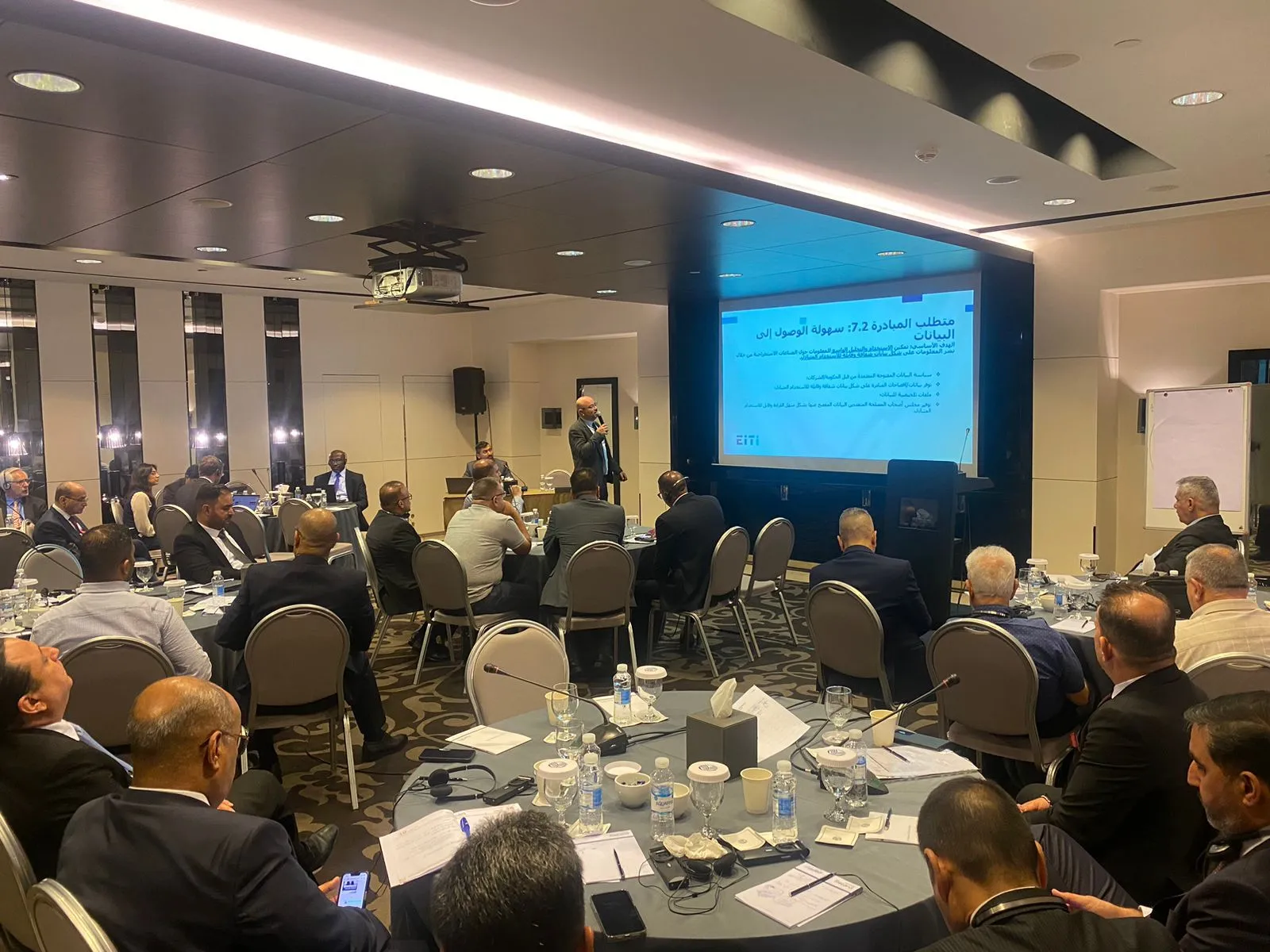
A "Pre-Verification Procedures" workshop was held on June 25-27, 2024, with the participation of representatives from government, industry, civil society, and companies, in addition to supporting bodies such as the World Bank and the Extractive Industries Transparency Initiative (EITI) International Secretariat. The primary purpose of the workshop was to enhance Iraq's commitment to the initiative's requirements and update financial and information disclosure mechanisms in line with international standards..
Positive indicators:
Multilateral cooperation: The workshop demonstrated broad engagement and effective cooperation among various stakeholders, with representatives of government, industry, civil society, and foreign companies attending, adding richness to the discussions and ensuring comprehensive follow-up.span>.
Good government commitment: Government representatives presented a clear vision for enhancing financial transparency, including the publication of audited financial statements for state-owned enterprises and the regular publication of important data and information on the extractive sector.
Improve disclosure: A plan has been put in place to improve the disclosure of financial statements from state-owned enterprises, enhancing transparency and providing accurate information to the public..
Interaction with civil society: Civil society workshops were organized to raise awareness about data. EITI and its use in public debate.
Support from the World Bank: The World Bank's commitment to providing technical assistance and financial support for the set objectives reflects the strategic importance of this program..
Challenges facing implementation:
Delay in financial disclosure by some government companies: Some state-owned enterprises still face challenges in providing timely audited financial statements, which impacts compliance with standards..
Lack of funding for some key activities: Some key activities have stalled due to insufficient funding, requiring rapid intervention from supporting agencies..
Delayed response from some government agencies: Weaknesses have been observed in the response of some ministries and government agencies to participate in some basic operations, which affects the implementation of transparency requirements such as updating licensing records and disclosing detailed data..
Need to update systems: There is an urgent need to update the systems and mechanisms used to disseminate data and improve their quality.
Recommendations:
Strengthening coordination mechanisms between stakeholders: It is recommended to establish a joint coordination committee comprising representatives of government, industry and civil society to follow up on the implementation of the workshop recommendations and coordinate efforts to ensure full compliance with the requirements..
Funding for the Authority's activities: Additional funding sources should be sought through cooperation with international organizations and donors to ensure the continued implementation of projects that lack funding, including aspects related to training and public awareness.
Accelerating the procedures for auditing the final accounts of state-owned companies: It requires pressure on state-owned companies to expedite final account audit procedures and adhere to international standards in order to enhance the credibility of reports submitted within the framework of the initiative.
Building the capacity of sector workers: It is recommended that additional training workshops be organized to build the capacity of employees in government agencies and companies operating in the extraction sector, to ensure their full compliance with financial transparency and disclosure requirements..